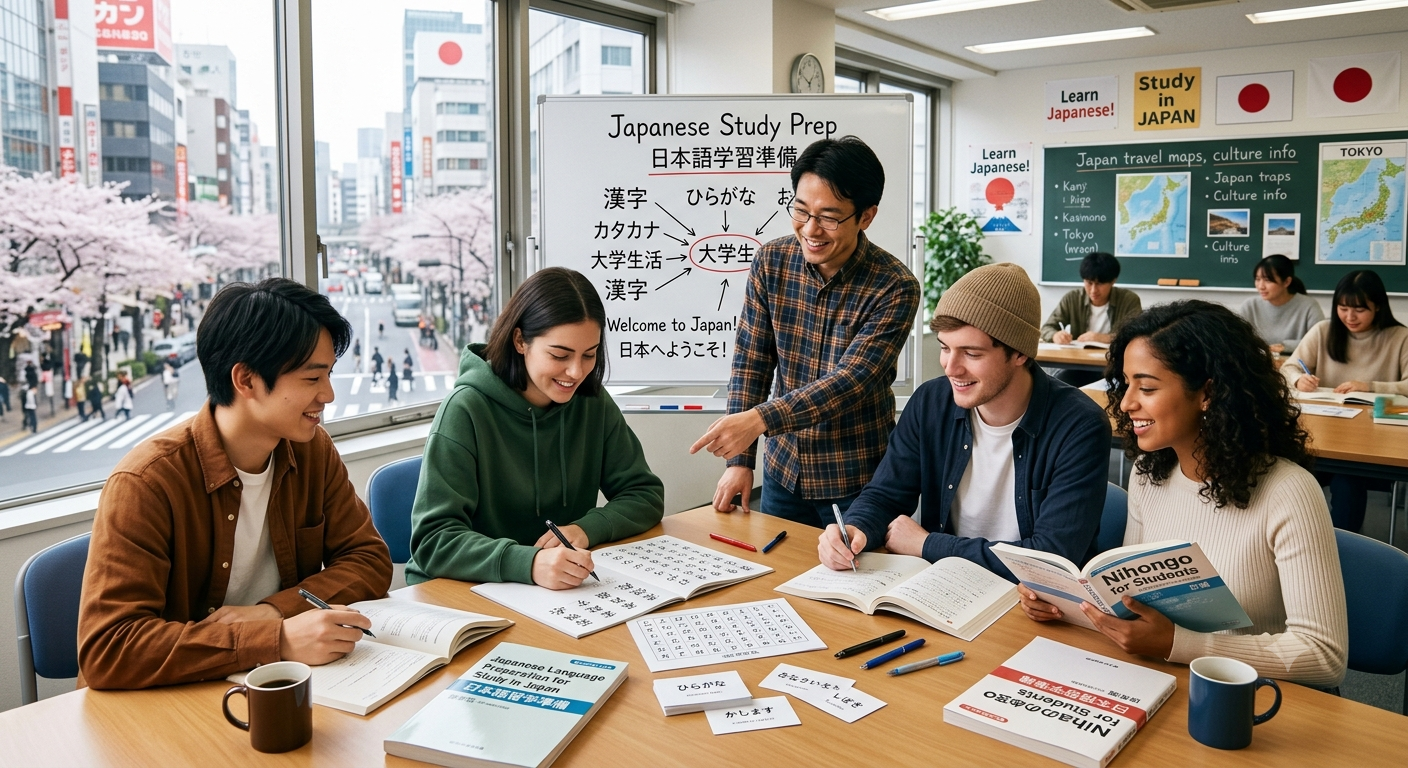
Studying in Japan can be an exciting opportunity for students who want to experience a new education system, explore Japanese culture, and develop skills for their future careers. However, preparing for international education involves more than selecting a university and completing application forms. Understanding the Japanese language can also be an important part of the journey.
Depending on the university and programme, students may need Japanese proficiency for admission, classroom learning, or everyday communication. Starting early gives learners time to build vocabulary, understand grammar, practise listening, and become familiar with Japanese writing systems.
For students beginning their learning journey in Delhi, exploring the Best Japanese course in GTB Nagar can be one way to find structured lessons and prepare for their future studies in Japan.
1. Understand Your University’s Japanese Language Requirements
Before starting your preparation, research the universities and programmes you want to apply to. Japanese language requirements vary depending on whether a programme is taught in Japanese or English.
Some English-taught programmes may not require Japanese proficiency for admission. However, Japanese-taught programmes may require applicants to demonstrate an appropriate level of language ability or provide accepted language test results.
Check the official university website for information about:
- The language of instruction.
- Required Japanese proficiency, if applicable.
- Accepted language examinations or qualifications.
- Entrance examinations and academic requirements.
- Application deadlines and supporting documents.
Understanding these requirements will help you choose a suitable study plan instead of preparing for a language level you may not need.
2. Start With Hiragana, Katakana, and Kanji
Japanese uses three main writing systems: hiragana, katakana, and kanji. Learning how these systems work is an important part of building a strong foundation.
Hiragana: Used for native Japanese words, grammatical elements, and word endings.
Katakana: Commonly used for foreign-origin words, some names, and certain types of emphasis.
Kanji: Characters used to represent meanings and parts of written words.
Beginners should first become familiar with hiragana and katakana before gradually expanding their knowledge of kanji.
Practise reading and writing characters regularly. Flashcards, handwriting exercises, and short reading activities can help reinforce what you learn in class.
3. Build a Strong Foundation in Japanese Grammar
Grammar helps you understand how Japanese sentences are formed. Students planning to study in Japan should gradually learn sentence structure, particles, verb forms, adjectives, and question patterns.
For example:
- 私は学生です。 (Watashi wa gakusei desu.) — I am a student.
- 日本語を勉強しています。 (Nihongo o benkyou shite imasu.) — I am studying Japanese.
- 大学はどこですか。 (Daigaku wa doko desu ka?) — Where is the university?
Practising complete sentences is more useful than memorising grammar rules in isolation. Try writing simple sentences about your studies, daily routine, hobbies, and future plans.
As you progress, you can move on to longer sentences and more complex grammar.
4. Improve Listening and Speaking Skills
Understanding written Japanese is only one part of language learning. Students may also need to understand spoken instructions, ask questions, and communicate with other people.
Listening and speaking practice can help you become more familiar with pronunciation, common expressions, and natural sentence patterns.
You can improve these skills by:
- Listening to beginner-level Japanese audio.
- Repeating short phrases aloud.
- Practising self-introductions.
- Role-playing conversations with classmates.
- Listening to Japanese videos with subtitles.
- Asking your instructor to correct pronunciation and grammar.
Start with simple conversations and gradually increase their length and complexity. Regular practice can help you become more comfortable using Japanese in everyday situations.
5. Learn Japanese Vocabulary for Student Life
Students preparing for Japan can benefit from learning words related to education, accommodation, transport, shopping, and daily activities.
Here are some useful words to begin with:
Japanese
Romaji
Meaning
学校
Gakkou
School
大学
Daigaku
University
学生
Gakusei
Student
先生
Sensei
Teacher
図書館
Toshokan
Library
電車
Densha
Train
駅
Eki
Station
住所
Juusho
Address
Review a few words each day and use them in sentences. For example, you can practise saying that you are a student, asking where the station is, or explaining that you want to go to the library.
Learning vocabulary connected to real-life situations makes revision more practical.
6. Understand Japanese Culture and Classroom Etiquette
Language preparation also includes understanding the cultural context in which Japanese is used.
Students may encounter different expectations around greetings, punctuality, classroom participation, and polite communication. Learning about these customs before travelling can help you adjust to a new educational environment.
For example, Japanese uses different levels of politeness depending on the situation. A phrase suitable for a close friend may not be the best choice when speaking with a professor or someone you have just met.
You can learn more by studying common greetings, watching educational videos, reading about Japanese customs, and practising formal and informal conversations.
Remember that customs can vary between institutions and individuals. Observe the situation and ask questions when you are unsure.
7. Consider JLPT Preparation if Your Goals Require It
The Japanese-Language Proficiency Test (JLPT) is an examination that assesses Japanese language knowledge, reading, and listening. It has five levels, from N5, the most basic, to N1, the most advanced.
Preparing for the JLPT can help you organise your learning around a defined level. However, the level you need depends on the requirements of your intended university or programme.
Keep in mind that the JLPT does not directly test speaking or writing. Students should practise those skills separately through conversation, writing exercises, and feedback from an instructor.
Before choosing an examination date, review the official test information and your target university's admission criteria.
8. Choose the Best Japanese Course in GTB Nagar for Your Goals
A structured course can help students organise their preparation, understand difficult grammar topics, and receive feedback on their progress.
When researching the Best Japanese course in GTB Nagar, consider the following factors:
- Beginner-friendly curriculum: Check whether the course covers writing systems, vocabulary, grammar, and pronunciation.
- Speaking and listening practice: Look for opportunities to practise conversations and understand spoken Japanese.
- JLPT preparation: If your university requires a language qualification, ask whether the course supports your target level.
- Cultural understanding: Lessons that include Japanese etiquette and everyday communication can be useful for students planning to move abroad.
- Teaching support: Find out whether instructors explain difficult concepts and provide opportunities for questions.
- Flexible schedule: Choose a course that fits your current studies and preparation timeline.
Do not rely only on a course title or promotional claims. Ask about the syllabus, class format, study materials, and expected learning outcomes before enrolling.
9. Create a Daily Japanese Study Routine
Consistent practice is important when preparing for a new language. A manageable daily routine can help you revise concepts without overwhelming your academic schedule.
Here is a sample routine for beginners:
Activity
Suggested time
Vocabulary revision
10 minutes
Hiragana, katakana, or kanji practice
10 minutes
Grammar exercises
15 minutes
Listening practice
10 minutes
Speaking or reading practice
10 minutes
You can adjust the routine based on your current level and available time.
On days when you attend a Japanese class, revise the material covered in the lesson. On other days, practise with flashcards, short reading passages, or beginner-level audio.
The aim is to build a routine that you can maintain consistently.
10. Combine Language Learning With Study-Abroad Planning
Japanese preparation should be part of a broader plan for studying abroad. While learning the language, research universities, academic programmes, tuition costs, living expenses, scholarships, and application deadlines.
Keep a checklist of important tasks, such as:
- Shortlisting suitable universities.
- Reviewing academic eligibility requirements.
- Confirming language requirements.
- Preparing academic transcripts and other documents.
- Researching scholarship opportunities.
- Checking official visa requirements.
- Planning your language study schedule.
Use official university and government websites for current information, especially when checking admission rules and visa conditions.
Starting this process early can help you identify requirements and prepare the necessary documents in time.
Conclusion
Japanese language preparation can help students build a foundation for studying in Japan. Learning the writing systems, grammar, vocabulary, listening, and speaking skills can support both academic preparation and everyday communication.
The first step is to understand your target university's requirements and create a realistic study plan. If you are beginning in Delhi, exploring the Best Japanese course in GTB Nagar can help you compare structured learning options that match your goals.
Combine regular lessons with daily revision, cultural learning, and careful study-abroad planning. With consistent effort, you can steadily improve your Japanese and prepare more confidently for your educational journey.
Frequently Asked Questions (FAQs)
1. Should I learn Japanese before studying in Japan?
It depends on your chosen programme. Some English-taught courses do not require Japanese proficiency, while Japanese-taught programmes may have specific language requirements. Japanese can also be helpful for everyday communication.
2. Which Japanese language level should I learn before applying to a university in Japan?
There is no single level required for every university. Check your chosen programme's official requirements before deciding whether to prepare for a particular JLPT level or another accepted qualification.
3. How should beginners start preparing for Japanese?
Start with hiragana and katakana, basic vocabulary, simple grammar, and everyday expressions. Practise listening and speaking regularly, and gradually introduce kanji and longer reading exercises.
4. Is the JLPT necessary for every student planning to study in Japan?
No. Requirements vary by institution and programme. Some universities may accept other language qualifications or offer English-taught programmes that do not require the JLPT.
5. How do I choose the Best Japanese course in GTB Nagar?
Compare the curriculum, teacher support, speaking and listening practice, class schedule, and JLPT preparation options if needed. Confirm the course details and learning outcomes before enrolling.
Relevant Tags
Japanese language preparation, study in Japan, Japanese language learning, Best Japanese course in GTB Nagar, Japanese classes in Delhi, JLPT preparation, Japanese for students, Japanese grammar, Japanese vocabulary, Japanese culture, study abroad preparation